
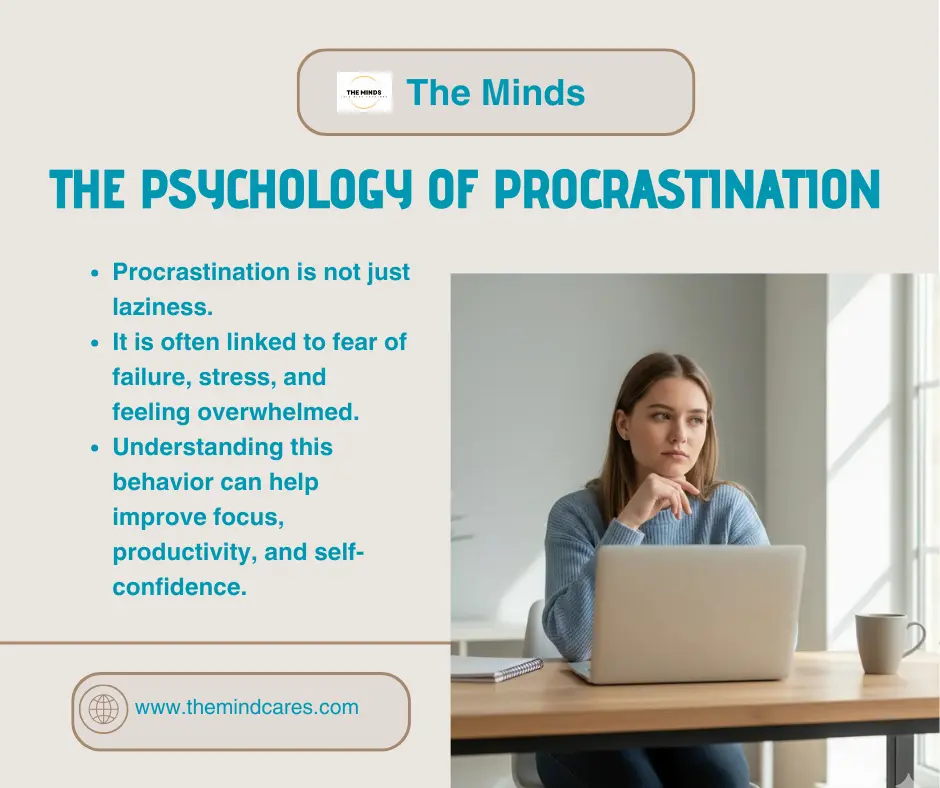
Procrastination is often misunderstood as laziness or a lack of discipline. In reality, psychology shows that procrastination is closely linked to how our brain processes emotions, stress, and motivation. Many individuals in Mansehra and Abbottabad struggle with delaying tasks related to studies, work, or personal goals, and it often comes with guilt, anxiety, and low self-confidence.
Understanding the psychological roots of procrastination is the first step toward managing it effectively.
If you are looking for professional support, you can explore psychological counseling services with a qualified psychologist in Mansehra or consult an experienced psychologist in Abbottabad to address procrastination and related mental health concerns.
Why Do We Procrastinate?
- Fear of Failure
One of the most common psychological reasons for procrastination is fear of failure. When individuals worry that their work will not be perfect, they may delay starting altogether. This fear can create mental paralysis, especially among students and professionals.
- Task Aversion
Tasks that feel boring, overwhelming, or emotionally uncomfortable are more likely to be postponed. The brain naturally avoids discomfort, even when the task is important.
- Time Blindness
Many people underestimate how long tasks will take. This cognitive bias leads to repeated delays and last-minute stress, which further reinforces procrastination habits.
- Dopamine-Driven Distractions
Instant gratification from social media, Netflix, or mobile apps provides quick dopamine rewards. Compared to long-term goals, these distractions feel easier and more satisfying in the moment.
How to Beat Procrastination (Psychologist-Approved Strategies)
Understand Your Triggers
Identify why you delay. Is it fear, boredom, stress, or self-doubt? Psychological counseling helps uncover these patterns and replace them with healthier responses.
Break Tasks Into Small Steps
Large tasks feel overwhelming. Breaking them into small, manageable steps reduces mental resistance and increases motivation.
Set Realistic Goals
Using SMART goals (Specific, Measurable, Achievable, Relevant, Time-bound) helps bring clarity and structure to your tasks.
Use Support Tools
Timers, productivity apps, or even an accountability partner can significantly reduce procrastination by creating structure and responsibility.
Reward Progress
The brain responds well to positive reinforcement. Celebrating small wins helps build motivation and consistency.
When to Seek Psychological Help for Procrastination
If procrastination is affecting your academic performance, career growth, or mental health, professional support can make a real difference. A licensed psychologist can help identify emotional blocks, manage anxiety, and build productive habits through evidence-based therapy.
You can book a session with a psychologist in Mansehra or a psychologist in Abbottabad to receive personalized counseling and practical strategies.
Psychological Counseling Services in Mansehra & Abbottabad
At The Minds, professional psychologists provide counseling to help individuals overcome procrastination, improve focus, and build healthier work habits. Whether you are a student, professional, or entrepreneur, structured psychological support can help you regain control and confidence.
Book an appointment today to consult a trusted psychologist in Mansehra or Abbottabad and start improving your productivity and mental well-being.
Frequently Asked Questions
Is procrastination a mental health problem?
Procrastination itself is not a disorder, but it is often linked to anxiety, stress, depression, or low self-esteem. A psychologist can help identify underlying causes.
Can counseling help with chronic procrastination?
Yes. Psychological counseling helps address emotional triggers, thought patterns, and habits that lead to procrastination.
Do psychologists in Mansehra and Abbottabad offer productivity counseling?
Yes. Professional psychologists at The Minds offer counseling for procrastination, academic stress, work pressure, and motivation issues.